
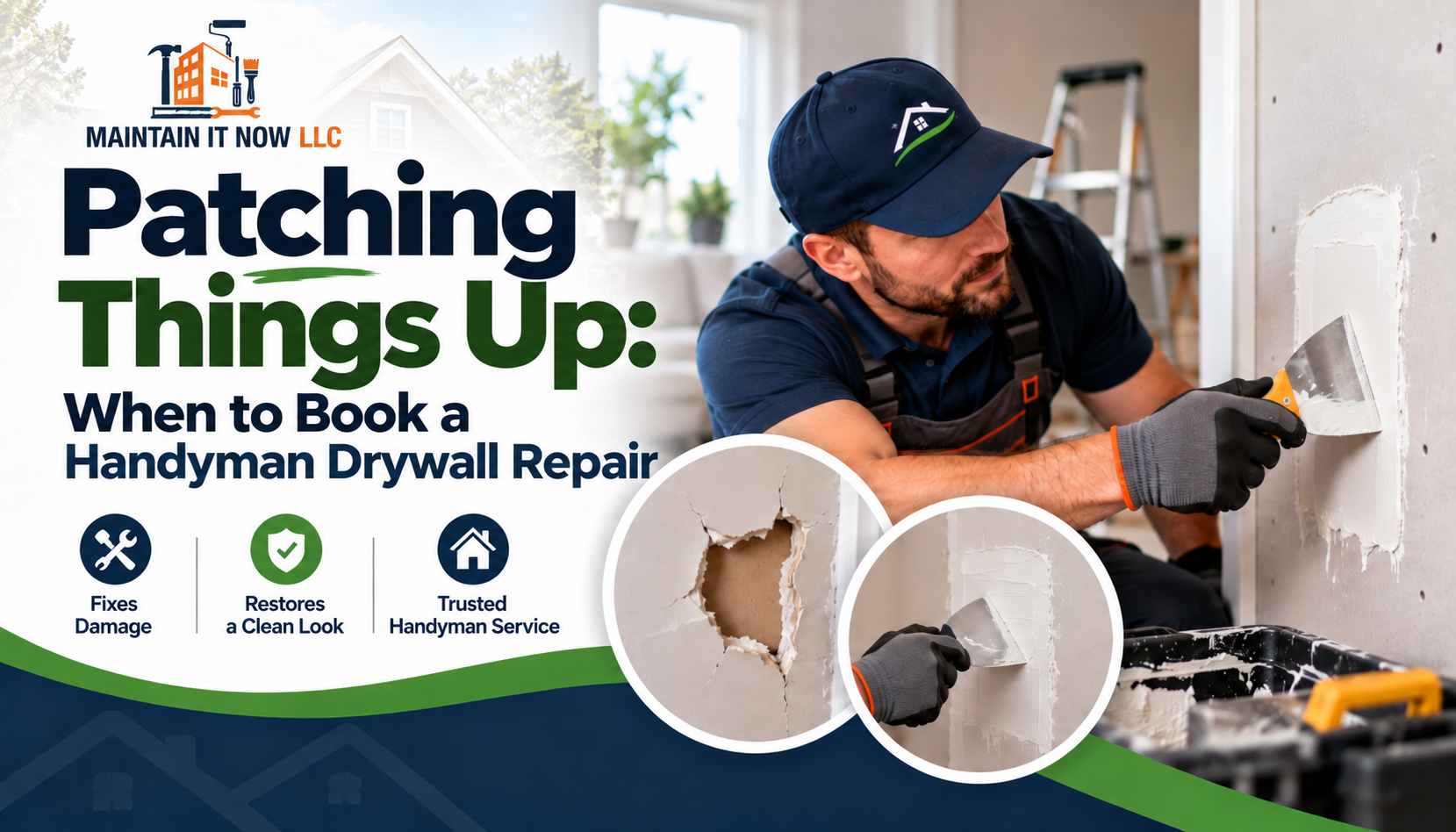
A small hole in the wall can be surprisingly hard to ignore.
Maybe a doorknob has left an impact mark behind the door. Maybe a tenant moved out and left a few dents. Perhaps an old wall-mounted item has been removed, leaving holes that are now impossible not to notice.
None of these problems necessarily calls for a major renovation. But leaving them untouched can make an otherwise well-maintained property look unfinished.
That is where handyman drywall repair can be a practical solution.
Small drywall repairs are often part of the everyday maintenance that keeps a home, rental property, or multifamily unit looking cared for. Maintain It Now provides general repair and property maintenance services throughout the Portland Metro area, including drywall repairs as part of its broader handyman services.
What Is Handyman Drywall Repair?
Handyman drywall repair focuses on smaller areas of wall damage rather than complete drywall installation or large-scale reconstruction.
Common examples include:
Small holes from doorknobs or wall-mounted items.
Dents and minor impact damage.
Small damaged sections around fixtures or hardware.
Patches left after removing wall-mounted items.
Minor surface damage that needs to be repaired before painting.
Small areas that need attention during a rental unit turnover.
The repair itself may be relatively small, but the finished result matters.
A poorly patched wall can remain visible even after it has been painted. Proper preparation, patching, smoothing, and finishing help the repaired area blend with the surrounding wall.
When Is a Drywall Repair Worth Booking?
One small mark may not seem like a priority.
But when several small repairs start accumulating, the walls can make the entire property look less maintained.
Consider booking drywall repair when:
| Situation | Why Repair It? |
|---|---|
| Doorknob hole | Prevents the damaged area from getting worse |
| Small wall dent | Restores a cleaner appearance |
| Removed wall fixture | Leaves a finished surface behind |
| Tenant move-out damage | Helps prepare the property for the next occupant |
| Multiple small holes | More efficient to address together |
| Damaged wall surface | Helps restore the finished appearance |
For property managers, grouping several small repairs into one service visit can also make maintenance easier to coordinate.
Doorknob Holes Are a Common Example
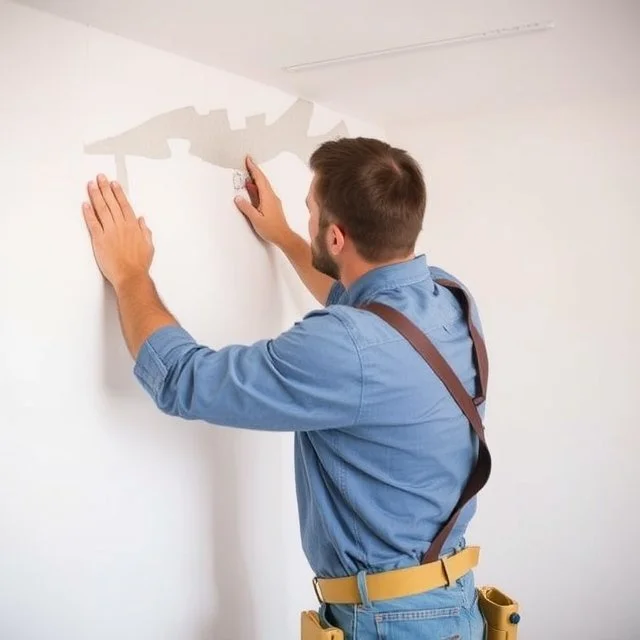
A door can cause more damage than people realize.
If there is no properly positioned doorstop, the doorknob can strike the wall when the door opens. Over time, repeated impacts can create dents, cracks, or a larger hole.
Once the wall is damaged, simply covering it with paint will not solve the problem.
The damaged area needs to be repaired and prepared properly before it can be painted.
A drywall repair can restore the wall, while a separate door or hardware repair may help address the reason the damage happened in the first place.
This is one advantage of using a general maintenance provider. The wall damage may be only one part of the repair list.
Small Repairs Can Make a Property Look Better
Walls occupy a lot of visual space.
That means even relatively small imperfections can stand out.
A property does not necessarily need a complete remodel to look better. Sometimes, fixing the details is what makes the difference.
Repairing drywall can help:
Make rooms look cleaner and more finished.
Improve the appearance of rental units between tenants.
Prepare a property for sale.
Complete a larger maintenance punch list.
Address visible damage before it becomes more noticeable.
The goal is not to make every wall look brand new. It is to keep the property looking properly maintained.
What Happens During a Typical Drywall Repair?
The exact process depends on the type and size of the damage, but a small repair generally requires more than simply applying a layer of compound.
1. Assess the Damage
The first step is identifying how extensive the damaged area is.
A small surface mark is different from a hole that has damaged the drywall around it.
The condition of the surrounding wall also matters.
2. Prepare the Area
Loose or damaged material may need to be removed or prepared so the repair can bond properly.
The surrounding surface should be stable before the patching work begins.
3. Patch and Smooth
The damaged section is repaired and the surface is smoothed.
This is where patience matters. A patch that is not properly blended can remain visible after painting.
4. Prepare for Finishing
Once the repair has been completed and properly prepared, the area can be finished to match the surrounding wall as closely as practical.
The objective is a smooth transition rather than an obvious patch.
When Searching for “Drywall Repair Near Me” Makes Sense
When a wall needs attention, many homeowners immediately search for drywall repair near me.
That can be useful, but proximity should not be the only consideration.
A local provider should also understand the type of property and the broader maintenance needs involved.
For example, a property manager may not only need a wall patched. The same unit may have damaged trim, a sticking door, worn hardware, or other items that need attention.
Maintain It Now works with homeowners, property managers, rental property owners, real estate investors, and multifamily communities throughout the Portland Metro area. Its services include general repairs, unit turns, preventive maintenance, tenant work orders, and property improvements.
Drywall Repair for Rental Properties
Rental properties often generate small wall repairs through normal use and tenant turnover.
A tenant may hang shelves or pictures. Furniture may cause an impact. A door may hit the wall. A fixture may be removed before the next tenant moves in.
Individually, these issues may be minor.
Together, they can create a noticeable punch list.
Maintain It Now supports rental property owners and managers with tenant work orders and unit turn services. Its approach is designed to help property owners address repairs and prepare vacant units for new tenants while minimizing unnecessary downtime.
For a rental property, timing matters. A wall that needs a simple patch should not unnecessarily hold up other turnover work.
Why Repair Several Small Problems Together?
One of the most practical reasons to work with a general handyman is the ability to combine related maintenance tasks.
Instead of scheduling separate appointments for every small problem, a property owner may be able to create a single repair list.
For example, a rental unit might need:
Two small drywall patches.
Loose door trim repaired.
Cabinet hardware replaced.
A damaged door adjusted.
Minor plumbing maintenance.
Other general repairs.
Bundling small jobs can make it easier to keep track of what has been completed and what still needs attention.
It also gives the service provider a better picture of the property's overall condition.
Drywall Repair as Part of Preventive Maintenance
Drywall damage is sometimes only cosmetic.
Other times, it can be a visible sign that something else needs attention.
For example, staining, soft drywall, or recurring damage may warrant a closer look rather than simply applying a patch.
Maintain It Now takes a proactive approach to property maintenance, including visual inspections for early signs of moisture intrusion, damaged finishes, loose fixtures, safety concerns, and general wear.
This broader view is important.
The objective should not be to cover up every visible problem. It should be to understand what caused the damage and determine whether another repair is needed.
When Drywall Damage Needs More Than a Patch
Not every wall problem is a simple drywall repair.
A larger hole, extensive water damage, structural damage, or recurring cracking may require additional investigation or a different type of contractor.
Homeowners should also pay attention to signs that suggest moisture behind the wall.
If drywall is repeatedly becoming damaged in the same location, repairing the surface without addressing the underlying cause may only provide a temporary fix.
A good maintenance provider should recognize when a repair is straightforward and when the condition needs further evaluation.
Why Fast Repairs Matter for Property Managers
For property managers, small repairs can become a scheduling problem when they are allowed to accumulate.
A vacant unit may be waiting for several punch-list items before it is ready for the next tenant. An occupied property may have multiple tenant work orders waiting for attention.
The longer a simple repair sits on the list, the easier it is for another issue to get added to it.
Maintain It Now provides tenant work order coordination, unit turns, preventive maintenance, and general repair services for rental properties.
A consistent maintenance process helps property managers keep those smaller tasks moving.
Fix the Small Things Before They Become the Big List
A small hole in the wall may not seem urgent, but a property full of small unfinished repairs can quickly look tired.
Drywall repair is one of those maintenance tasks where a relatively focused repair can make a noticeable difference. Whether the issue is a doorknob hole, a small dent, tenant damage, or another wall imperfection, addressing it promptly helps keep the property looking clean and maintained.
For homeowners and property managers in the Portland Metro area, Maintain It Now provides drywall and general repair services as part of its broader home and rental property maintenance work. The company also supports tenant work orders, unit turns, preventive maintenance, and property improvements.
Contact us to discuss your drywall repair or broader property maintenance needs and create a practical repair plan.
Frequently Asked Questions About Handyman Drywall Repair
-
Yes. Small holes, dents, and similar wall damage can be appropriate for general handyman drywall repair, depending on the size and condition of the damaged area.
-
A small hole or damaged section caused by a doorknob can often be patched and finished. It is also worth checking whether the door or hardware needs attention to prevent the problem from happening again.
-
Generally, yes. Painting over a hole or uneven patch will not properly restore the surface. The damaged area should be repaired and prepared before finishing.
-
Yes. Small wall repairs are common punch-list items during tenant turnover and can help a vacant unit look properly maintained before the next tenant moves in.
-
Look for a local maintenance provider with experience handling the type of repair you need. If you have several small property repairs, consider whether the provider can handle those items during the same service visit.