
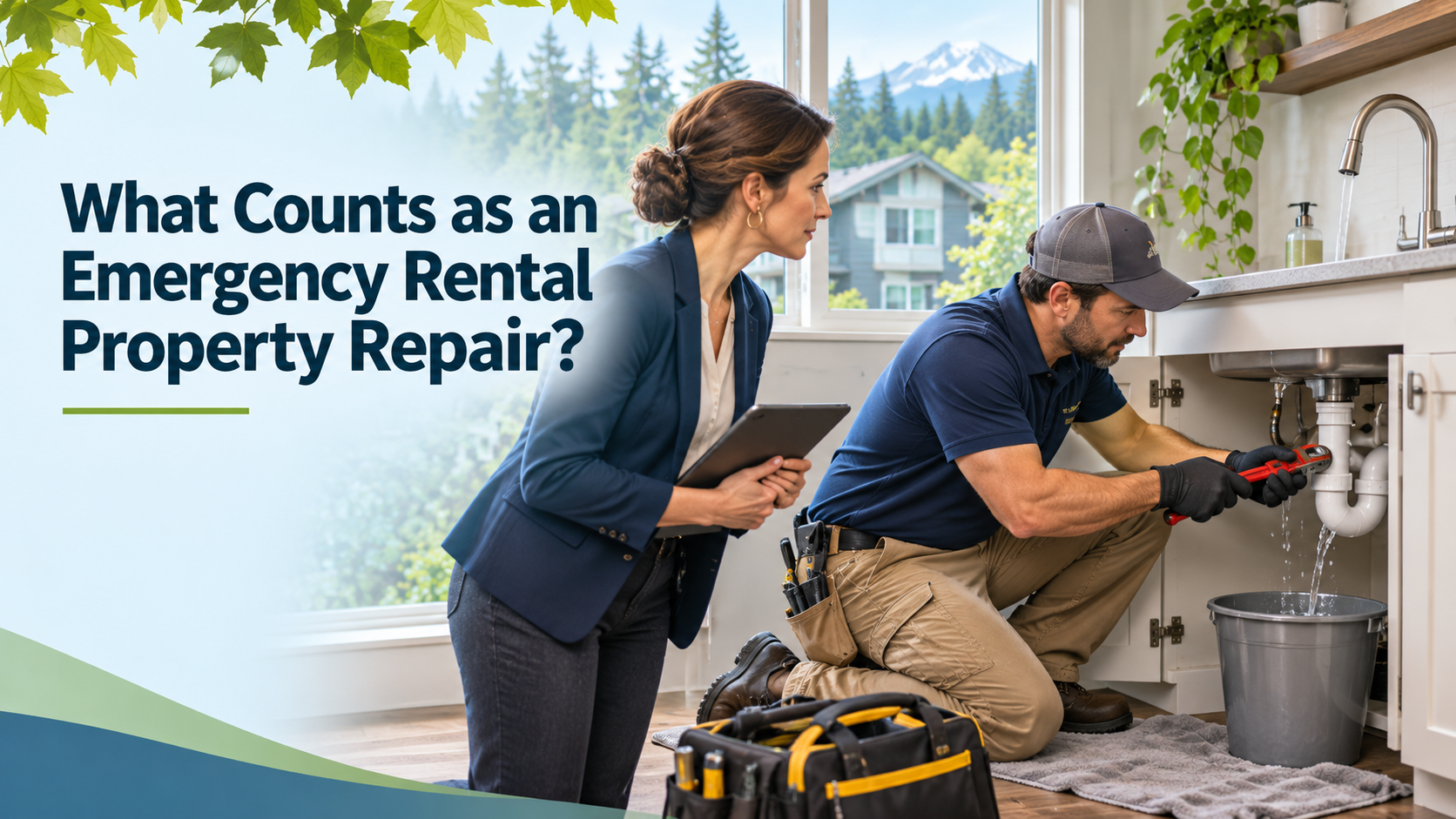
A maintenance request from a tenant does not always require an immediate response. A dripping faucet, loose cabinet handle, and leaking ceiling may all need attention, but they do not carry the same level of risk.
For landlords and property managers, knowing the difference between an emergency and a routine repair helps protect tenants, limit property damage, and organize maintenance work more effectively.
Emergency property maintenance generally involves a problem that creates an immediate safety risk, threatens the property's condition, or prevents tenants from using an essential part of the home. These issues should be addressed promptly, with the appropriate professional involved.
This guide explains common rental property emergencies, how to prioritize maintenance requests, and when to arrange professional repairs in the Portland area.
What Is Considered an Emergency Rental Property Repair?
An emergency repair is an issue that cannot reasonably wait for a routine maintenance appointment. The exact response depends on the situation, the property's condition, and the risk to occupants.
For example, a pipe leaking heavily beneath a sink may require immediate attention if water is spreading into cabinets or flooring. A slow-draining bathroom sink may be less urgent if it remains usable and there is no active leak.
Landlords should consider three main questions when evaluating a maintenance request:
Is someone in immediate danger? Electrical hazards, fire risks, structural concerns, or unsafe conditions require urgent attention.
Is the property at risk of further damage? Active water leaks, flooding, and other problems can become more expensive if left unresolved.
Has an essential service stopped working? A loss of essential utilities or a major plumbing problem may require a faster response than a minor inconvenience.
When the situation is unclear, it is safer to investigate rather than assume the problem can wait.
7 Rental Property Repairs That May Require Immediate Attention
Not every issue in these categories is automatically an emergency. The severity, location, and impact on tenants determine the appropriate response.
1. Active Water Leaks or Flooding
A burst pipe, failed supply line, or significant leak can damage flooring, cabinets, walls, and nearby belongings. Water may also spread into areas that are not immediately visible.
Landlords should ask tenants to explain where the water is coming from, how quickly it is spreading, and whether they can safely access the affected area. If it is safe to do so, shutting off the relevant water supply may help limit damage while professional assistance is arranged.
2. Electrical Hazards
Sparking outlets, exposed wiring, burning smells, or signs of electrical overheating should be treated seriously. Tenants should avoid touching damaged electrical components or attempting repairs themselves.
Arrange help from a properly licensed electrical contractor. If there is smoke, fire, or immediate danger, tenants should move away from the affected area and contact emergency services.
3. Heating Problems During Cold Weather
A heating failure can become a serious concern during cold weather, especially when indoor temperatures drop significantly. The landlord should establish whether the heating system has stopped working completely or whether the issue is limited to one room or component.
A qualified HVAC professional may be needed to inspect and repair the system. Do not assume a routine handyman repair is appropriate for every heating problem.
4. Sewer Backups or Major Drain Problems
A sewer backup or wastewater overflow can create sanitation concerns and make parts of a rental property unusable.
Tenants should avoid contact with contaminated water and report the affected drains, toilets, and rooms. Depending on the source and severity, a qualified plumbing professional may need to inspect the system and determine the appropriate repair.
5. Broken Exterior Doors or Entry Locks
A damaged entry door or lock can leave a rental unit unsecured. This may create a security concern, particularly if tenants cannot lock the property when leaving or sleeping.
Landlords should arrange a prompt repair or suitable temporary security measure. A damaged interior cabinet door, by comparison, would normally be a routine maintenance issue unless it creates another safety problem.
6. Structural Damage or Ceiling Failure
A sagging ceiling, major wall movement, or damaged stairs may indicate a safety concern. If part of the structure appears unstable, tenants should avoid the affected area until it has been assessed.
A qualified professional should determine the source of the damage and what work is required. Do not treat a potentially unsafe structural issue as an ordinary cosmetic repair.
7. Broken Windows or Significant Exterior Damage
A broken window can expose a rental unit to weather, create a security problem, or leave broken glass in an accessible area.
The landlord should arrange safe cleanup and temporary protection where appropriate, followed by the necessary repair or replacement. A small cosmetic scratch on a window frame would generally be less urgent.
Emergency vs. Urgent vs. Routine Maintenance
A simple priority system helps landlords respond consistently instead of treating every tenant request as equally urgent.
| Maintenance Priority | Common Examples | Recommended Response |
|---|---|---|
| Emergency | Major water leak, electrical hazard, sewer backup, unsafe structural damage | Take immediate safety steps and arrange appropriate professional assistance |
| Urgent | Broken exterior lock, worsening leak, essential fixture failure | Arrange prompt assessment and repair before the problem becomes more serious |
| Routine | Minor drywall damage, loose cabinet hardware, small cosmetic issues | Add to the maintenance schedule and coordinate a suitable appointment |
This table is a practical guide, not a substitute for applicable landlord-tenant laws, lease terms, or local requirements. Landlords should follow the legal response obligations that apply to their property.
How Landlords Should Handle an Emergency Maintenance Request
A consistent process helps property managers collect the right information and avoid unnecessary delays.
Step 1: Get Clear Details From the Tenant
Ask the tenant to describe the issue and identify the affected area. Photos or videos may help show the extent of visible damage, but tenants should not be asked to approach unsafe equipment or enter hazardous areas to collect them.
Useful details include when the issue started, whether it is getting worse, and whether water, electricity, heat, or access to the unit is affected.
Step 2: Identify Immediate Safety Concerns
Determine whether tenants need to stay away from a particular area or contact emergency services. Safety should come before arranging an ordinary repair appointment.
Step 3: Contact the Appropriate Professional
The repair provider should match the type of problem. A general maintenance professional may handle common repairs, while electrical, HVAC, plumbing, and other specialized work may require a properly licensed specialty contractor.
Step 4: Keep the Tenant Informed
Explain what steps are being taken and provide realistic updates about access and scheduling. If a repair requires more than one visit, let the tenant know what will happen next.
Step 5: Document the Work
Keep the original tenant request, photographs where available, service notes, invoices, and follow-up details. This creates a useful maintenance record and helps identify recurring problems.
How Preventive Maintenance Can Reduce Rental Property Emergencies
Some emergencies begin as smaller problems that were not identified or addressed early. A minor plumbing leak, for example, can affect cabinets and flooring if it continues unnoticed.
A regular maintenance routine can help landlords identify concerns before they become more extensive.
Consider including these checks in your property maintenance plan:
Inspect plumbing fixtures: Look for dripping faucets, running toilets, visible pipe leaks, and water stains beneath sinks.
Review doors and locks: Check that exterior doors close securely and that locks and hardware work correctly.
Check flooring and walking areas: Look for loose flooring, damaged transitions, and trip hazards.
Review visible moisture concerns: Look for water stains, damp surfaces, and signs of recurring leaks.
Address tenant reports promptly: Repeated complaints about the same fixture or area may indicate an unresolved problem.
These checks do not replace specialist inspections or required system servicing. They provide landlords with a practical way to stay aware of the property's condition.
How Maintain It Now Supports Rental Property Repairs in Portland
Managing rental maintenance can involve coordinating tenants, repair appointments, follow-up work, and specialist contractors. Having one reliable point of contact for routine repairs and property maintenance can make that process easier to organize.
Maintain It Now supports Portland-area property owners and managers with general repairs, maintenance, unit turns, and property preparation. Its website lists common plumbing services such as faucet and sink repairs, toilet repairs, drain unclogging, minor pipe leak repairs, fixture replacement, and leak inspections.
When a repair goes beyond the company's handyman scope, Maintain It Now works with vetted, licensed, and insured trade partners for specialized work. For example, a plumbing concern that requires a licensed plumber can be referred to an appropriately qualified professional.
Landlords who need help with everyday plumbing issues can learn more about emergency property maintenance and plumbing repair services. The team can help review the maintenance concern and determine an appropriate next step based on the work required.
For broader rental property maintenance, visit Maintain It Now to discuss repairs, property upkeep, and unit preparation in the Portland Metro Area.
Frequently Asked Questions
-
A request may qualify as an emergency when it involves immediate danger, active property damage, a serious sanitation concern, or the loss of an essential service. Examples include major water leaks, electrical hazards, sewer backups, and unsafe structural damage.
-
Landlord responsibilities depend on applicable laws, the lease, and the circumstances. Property owners should understand their legal obligations and respond promptly when a reported issue affects safety, habitability, or essential property functions.
-
A slow drip from a faucet is generally a routine repair if it is contained and does not create a safety or property damage concern. However, a leaking supply line or water spreading into cabinets and flooring may require a much faster response.
-
Not necessarily. The term describes the type and urgency of a maintenance problem, not a guaranteed service schedule. Landlords should confirm their maintenance provider's actual availability and establish an appropriate emergency contact process for tenants.
-
A licensed specialty contractor should handle work that requires specific trade licensing, such as certain plumbing, electrical, or HVAC repairs. When a maintenance issue falls outside a handyman's permitted scope, the appropriate qualified professional should be involved.
-
Regular property inspections, prompt attention to tenant reports, plumbing checks, and timely repairs can help identify developing problems. Keeping maintenance records also makes it easier to spot recurring issues and plan future work.