
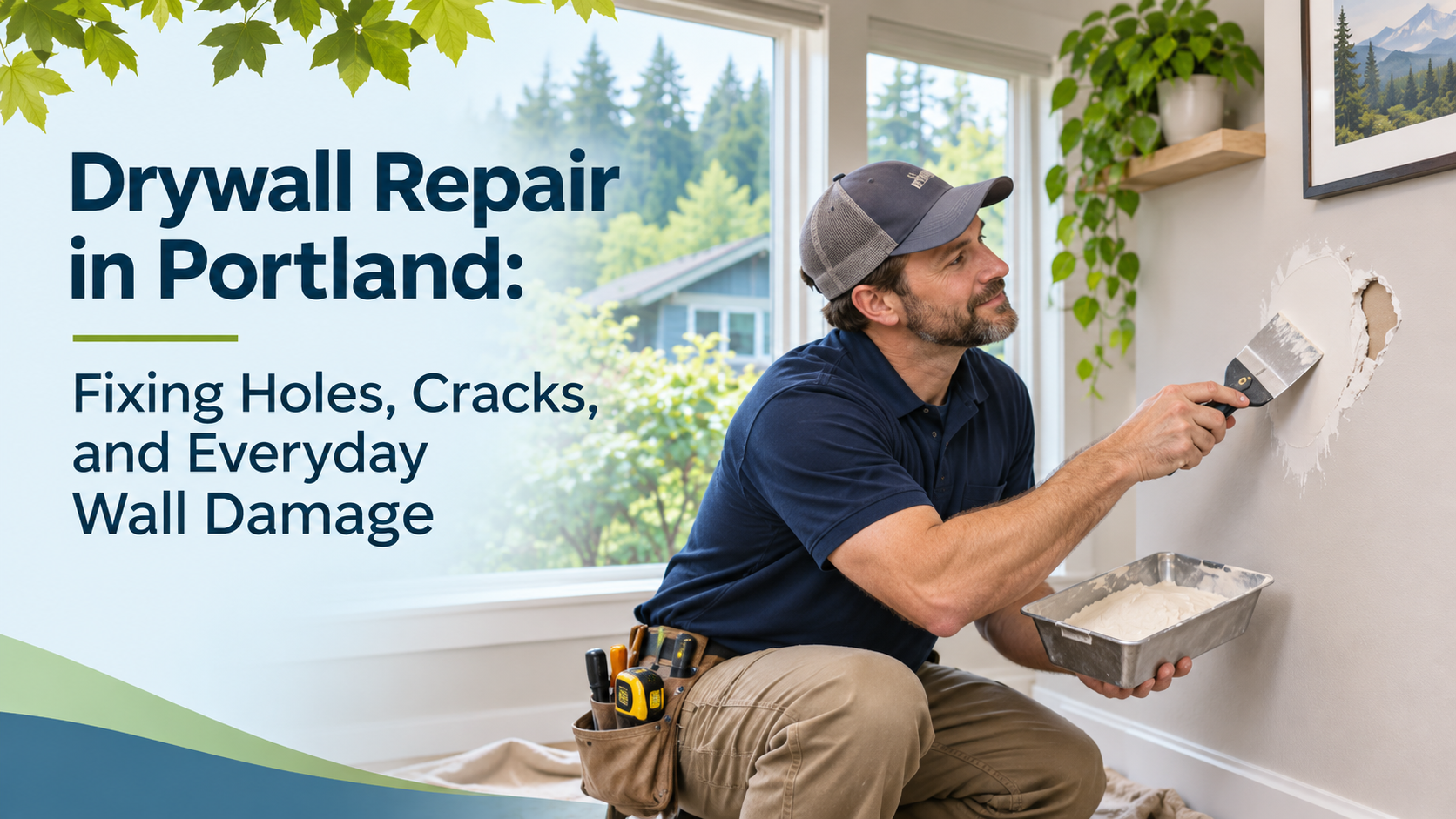
A damaged wall can change the way an entire room looks. A small hole behind a door, a dent from moving furniture, or a cracked drywall corner may seem like a minor issue. But once you notice it, it can be difficult to ignore.
Portland homeowners encounter drywall problems for many reasons. Everyday use, furniture movement, door impacts, previous repairs, and general wear can all leave marks on interior walls. Rental properties may also develop wall damage between tenants, making drywall repair an important part of routine maintenance and unit preparation.
Professional Drywall Repair in Portland can help restore damaged surfaces without automatically requiring a complete wall replacement.
The right repair depends on the size of the damage, the condition of the surrounding drywall, and whether an underlying problem needs attention first.
Common Types of Drywall Damage in Portland Homes
Not every wall problem requires the same repair method. Some damage can be handled with a small patch, while other areas need more extensive preparation and finishing.
Here are some common issues homeowners and property managers may encounter.
| Type of Damage | Common Cause | Possible Repair |
|---|---|---|
| Small holes | Picture hangers, anchors, and screws | Filling and finishing the damaged area |
| Larger holes | Door handles, furniture, or impact | Patching or replacing a section of drywall |
| Dents and scratches | Everyday contact and moving | Filling, smoothing, and refinishing |
| Corner damage | Furniture and repeated impacts | Repairing damaged corner material |
| Visible seams | Previous repairs or installation issues | Additional joint finishing |
| Cracks | Movement, settling, or other conditions | Evaluating the cause before repairing |
Understanding the type of damage helps determine the appropriate repair rather than simply covering the visible problem.
Small Drywall Holes and Wall Patching
Small holes are among the most common reasons people search for a Drywall Repair Handyman Portland service.
They can appear after removing picture frames, wall anchors, shelves, hooks, or other mounted items. Even when the hole is small, several of them across one room can make the walls look unfinished.
A typical repair may involve:
Preparing the area: Removing loose material and making sure the surrounding drywall is suitable for repair.
Filling the hole: Using an appropriate patching compound or repair method based on the size of the damage.
Smoothing the surface: Feathering the repair so it blends more naturally with the surrounding wall.
Finishing the area: Preparing the repaired surface for primer and paint when needed.
The size of the hole matters. A small nail hole is different from a larger opening left by a removed shelf or damaged wall fixture.
For larger holes, a more substantial patch may be necessary to create a stable repair.
Repairing Doorknob Holes and Impact Damage
A door that swings open too far can strike the wall behind it. Over time, this can create a hole or break the drywall around the impact point.
Furniture moving can cause similar damage, especially in narrow hallways, bedrooms, and apartments.
These repairs often need more than simply filling the opening. Damaged drywall may need to be removed, the repair area supported, and the surface rebuilt before finishing.
It is also worth checking why the damage happened. If a door handle repeatedly hits the wall, a suitable doorstop or other protective measure may help prevent the same problem from happening again.
Repairing the wall without addressing the repeated impact can lead to another repair later.
Fixing Damaged Drywall Corners
Drywall corners are exposed to regular contact from furniture, boxes, vacuum cleaners, and everyday movement around the home.
A damaged corner may show chipped compound, exposed corner bead, cracking, or an uneven edge.
The repair depends on how much of the corner has been affected. Minor surface damage may need filling and refinishing. More extensive damage may require repairing or replacing the affected corner material.
Corners deserve attention because they help define the edges of walls and doorways. A rough or damaged corner can stand out even after the rest of the room has been painted.
Understanding Drywall Cracks
Not every drywall crack is a simple cosmetic problem.
Small cracks may develop around joints, corners, windows, and doors. Some are related to normal building movement or changes in materials over time. Others may indicate a more significant issue that needs further evaluation.
Before repairing a crack, consider:
Location: Is the crack near a door, window, ceiling, or wall joint?
Appearance: Is it a thin surface crack or a wider opening?
Changes over time: Does it appear to be getting longer or wider?
Other signs: Is there staining, moisture, separation, or visible movement nearby?
A recurring or widening crack should not simply be filled and painted without understanding the possible cause.
Where there are signs of structural movement or water intrusion, the underlying issue should be evaluated by the appropriate professional before cosmetic drywall work begins.
Matching Drywall Texture and Finishing the Repair
One of the challenges with drywall repair is making the finished area look consistent with the rest of the wall.
A smooth patch on a textured wall can remain noticeable even when the hole itself has been filled correctly.
The repair process may involve matching the surrounding surface as closely as practical. This depends on the existing texture, the size of the damaged area, the materials used, and the condition of the original wall.
Common considerations include:
Smooth walls: The repair needs careful sanding and finishing to avoid visible edges.
Light texture: The surrounding pattern may need to be reproduced across the repaired area.
Heavier texture: Matching an older or more pronounced finish can require additional preparation.
Paint differences: Existing paint may have faded or changed over time, making exact color matching difficult.
Sometimes painting only the repaired area is sufficient. In other situations, painting a larger section or the entire wall may produce a more consistent appearance.
The goal is a clean, properly finished repair rather than promising that every older wall will look completely untouched.
Drywall Repair Before Painting
Painting over damaged drywall does not solve the underlying surface problem.
Small dents, rough patches, raised edges, and visible seams may become even more noticeable after fresh paint is applied.
That is why drywall preparation should happen before painting.
A suitable repair process may include removing loose material, filling damaged areas, smoothing the surface, and allowing repair compounds to dry properly before finishing.
For homeowners planning a room refresh, it can be useful to combine drywall repairs with the painting work rather than treating them as unrelated projects.
This also applies to rental properties, where wall preparation is often part of a larger turnover punch list.
Drywall Repairs in Rental Properties
Rental units experience regular movement, furniture changes, and everyday tenant use. When one tenant moves out, property managers may find holes, dents, damaged corners, or unfinished wall patches.
These issues can affect the property's appearance and make an otherwise clean apartment feel less maintained.
Common rental drywall tasks include:
Patching holes left by wall anchors and mounted items.
Repairing impact damage around doors.
Smoothing damaged corners.
Addressing visible imperfections before repainting.
Reviewing staining or other signs that may indicate moisture problems.
For property managers, it can be helpful to include drywall repairs in the broader unit-turn checklist.
Several suitable repairs can be grouped together with door adjustments, cabinet hardware, trim work, and other general maintenance tasks.
When Should You Repair or Replace a Section of Drywall?
The right decision depends on the condition of the damaged area.
Small holes, shallow dents, and limited surface damage can often be repaired without replacing an entire section of drywall.
However, replacement may be more appropriate when the material is severely damaged, crumbling, repeatedly affected by moisture, or unable to support a reliable patch.
| Situation | Possible Approach |
|---|---|
| Small nail or screw holes | Fill and finish |
| Minor dents | Patch and smooth |
| Larger impact holes | Install an appropriate drywall patch |
| Damaged corners | Repair or replace affected corner material |
| Widespread surface damage | Evaluate the extent of repair needed |
| Water-damaged drywall | Address the moisture source and assess the affected material |
| Recurring cracks | Investigate the underlying cause before refinishing |
A repair provider should assess the actual condition of the wall before recommending a larger replacement project.
How to Choose a Drywall Repair Handyman in Portland
When searching for Drywall Repair Handyman Portland services, homeowners should consider more than how quickly someone can fill a hole.
A good repair starts with understanding the damage and choosing an appropriate method.
Consider these points:
Experience with different repairs: Small holes, larger patches, corner damage, and surface finishing require different approaches.
Preparation and finishing: Ask how the repaired area will be prepared for painting and whether texture matching is included.
Attention to underlying problems: Moisture damage and recurring cracks may need additional investigation.
Clear scope of work: Understand what is included, especially if painting or finishing is separate.
Broader maintenance experience: If you have several repairs, a provider who can handle suitable general maintenance tasks may help organize the work.
For rental properties, familiarity with unit turns and property maintenance can also be valuable.
How Maintain It Now Helps With Drywall Repairs in Portland
Maintain It Now provides general repair and property maintenance services throughout the Portland Metro area.
Drywall repairs are part of its general repair services, alongside doors, trim, flooring, cabinets, windows, hardware, fencing, and other everyday maintenance needs.
Homeowners and property managers can learn more about Drywall Repair in Portland and the company's approach to addressing damaged walls and other general repair needs.
Maintain It Now also supports rental property owners and managers with unit turns, preventive maintenance, and tenant work orders. This can be useful when drywall repair is only one item on a larger maintenance list.
If damage involves an active leak, significant structural movement, or another specialized issue, the underlying concern should be evaluated by the appropriate professional before cosmetic repairs are completed.
Conclusion
Drywall damage is easy to put off. A small hole behind a door or a rough patch in the hallway may not seem urgent, but these details can gradually affect the appearance of a home.
Whether you are dealing with moving-day wall damage, cracked corners, visible patches, or rental unit repairs, the right repair approach can help restore the surface without unnecessary replacement.
Maintain It Now provides general drywall repair and property maintenance services throughout Portland Metro. If your walls need attention or you have several unfinished repairs around the property, visit Maintain It Now and Contact us to discuss the work.
Frequently Asked Questions
-
The cost depends on the size of the damaged area, the repair method, surface texture, finishing requirements, and whether painting is included. A small nail hole requires less work than a larger impact hole or damaged corner.
-
Yes. Appropriate general handyman services can include patching small holes, repairing dents, addressing minor impact damage, and preparing repaired surfaces for finishing.
-
Texture can often be matched or blended, depending on the original finish and the size of the repair. Older or heavily textured walls may be more difficult to match exactly.
-
The source of moisture should be identified and addressed first. The affected drywall should then be evaluated to determine whether it can be repaired or needs replacement.
-
Yes. Small holes, dents, damaged corners, and other appropriate wall repairs can be included in a rental turnover punch list, often alongside other general maintenance work.
-
Not every small crack indicates a serious problem. However, widening or recurring cracks, especially those accompanied by moisture or visible movement, should be evaluated before cosmetic repairs are made.
-
They can be coordinated as part of the same project. The damaged surface needs to be properly repaired, smoothed, and prepared before painting begins.