
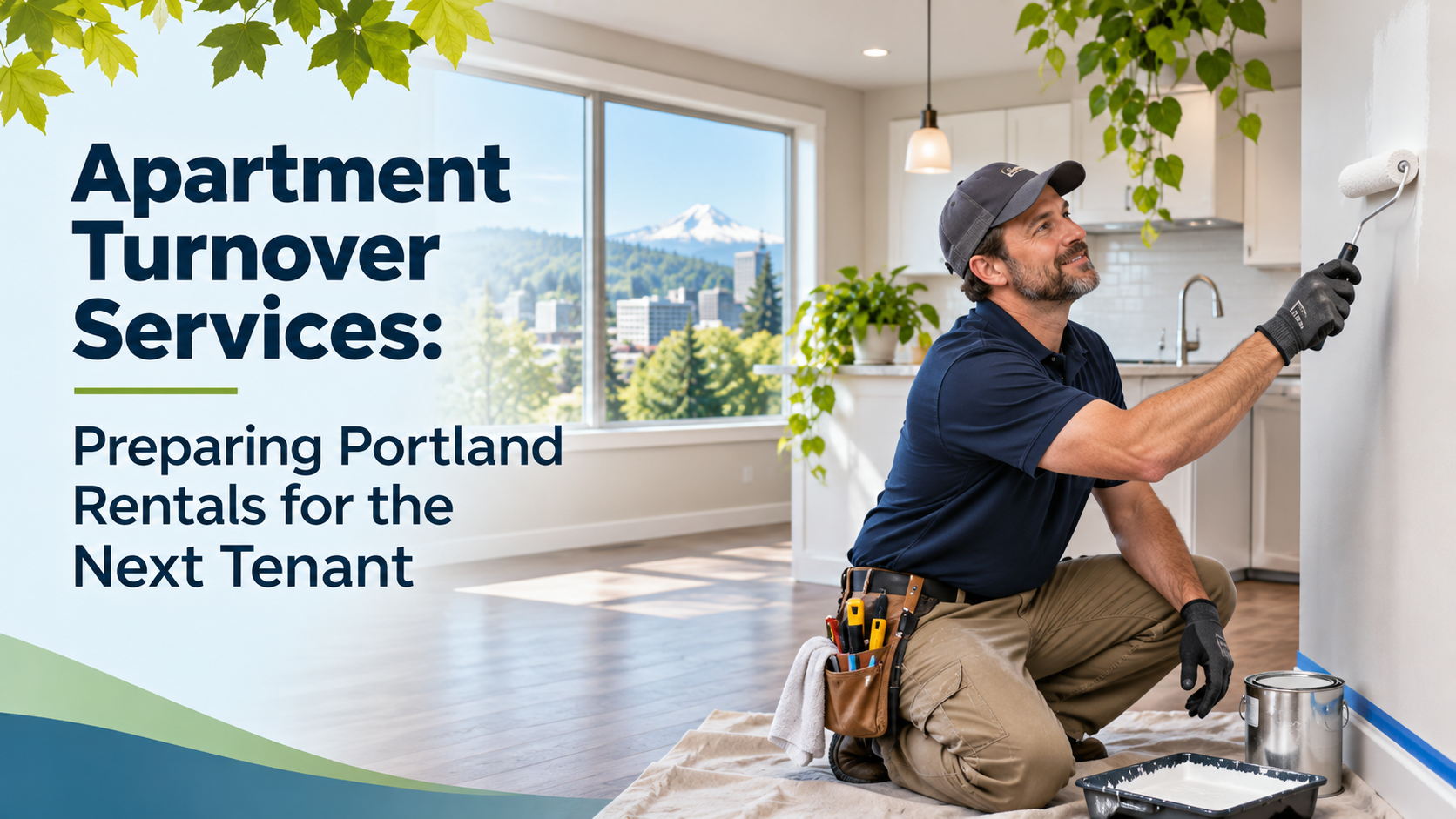
When a tenant moves out of an apartment, the work of preparing the property for the next renter begins. Even when a unit has been reasonably maintained, the move-out process can reveal damaged drywall, worn flooring, loose cabinet hardware, sticking doors, and other issues that need attention.
For Portland landlords and property managers, the challenge is not simply fixing individual problems. It is coordinating the work, keeping track of what needs to be completed, and getting the apartment ready for its next occupant without unnecessary delays.
That is where professional Apartment Turnover Services can help.
A well-organized turnover process brings repairs, maintenance, and property preparation together into one practical plan. Instead of handling every issue separately, property owners can create a clear punch list and organize the appropriate work before the next tenant moves in.
Why Apartment Turnovers Need a Clear Plan
A vacant apartment does not generate rental income while it is being prepared for the next tenant. Delays can affect leasing schedules, especially when several repairs need to be completed before the property is ready.
However, rushing through the process can create problems of its own. A repair that is missed during the turnover may become a maintenance request shortly after the next tenant moves in.
A clear turnover plan helps landlords focus on the work that matters.
Common tasks include:
Wall repairs: Patching holes, dents, and damaged drywall left behind after normal occupancy.
Door and hardware repairs: Checking hinges, handles, locks, and doors that do not close properly.
Cabinet maintenance: Adjusting hinges, repairing drawers, and replacing damaged hardware.
Flooring checks: Identifying damaged sections, loose transitions, and visible wear.
Trim repairs: Addressing damaged baseboards, door casing, and other interior woodwork.
General punch-list work: Completing smaller repairs that affect the condition and usability of the apartment.
The exact work depends on the unit's condition, the lease requirements, and the property manager's turnover standards.
What Should Be Included in an Apartment Turnover Checklist?
A turnover checklist helps property managers avoid relying on memory or scattered maintenance requests.
It also makes it easier to communicate the required work to maintenance providers and review completed repairs.
| Apartment Area | Common Turnover Tasks | Why It Matters |
|---|---|---|
| Walls and ceilings | Patch holes, repair dents, review visible damage | Helps restore a clean, maintained appearance |
| Doors and hardware | Check hinges, handles, locks, and alignment | Supports everyday use and security |
| Kitchen | Review cabinets, drawers, hardware, and visible damage | Keeps kitchen features functional |
| Bathroom | Check cabinets, caulking, fixtures, and visible moisture concerns | Helps identify maintenance issues early |
| Flooring | Inspect damaged areas and transitions | Addresses wear and potential trip concerns |
| Trim and baseboards | Repair loose or damaged sections | Improves the appearance and condition of rooms |
| General maintenance | Review outstanding repair items | Helps avoid unfinished work before move-in |
The checklist should also distinguish ordinary maintenance from problems that need a specialty contractor. Plumbing, electrical, HVAC, structural, and other regulated work should be assigned to appropriately qualified and licensed professionals.
Drywall Repairs and Interior Wall Preparation
Walls are among the most noticeable parts of an apartment during a showing.
After a tenant moves out, property managers may find picture holes, furniture marks, damaged corners, or sections that need patching before repainting.
Small drywall repairs can make a meaningful difference in how a unit looks. Leaving visible holes and unfinished patches can make an otherwise well-maintained apartment appear neglected.
Turnover work may include:
Patching small holes and dents.
Repairing damaged drywall corners.
Smoothing previous patches.
Preparing appropriate surfaces for painting.
Identifying visible staining or moisture damage that needs further investigation.
If a wall has signs of an active leak or recurring moisture, the source should be addressed before cosmetic repairs are completed.
Painting and Interior Finish Preparation
Painting is often considered during an apartment turnover because walls and trim can show wear after repeated occupancy.
Not every unit needs a complete repaint. Some may only need selected areas touched up, while others may require more extensive preparation depending on the condition of the surfaces and the property's leasing standards.
Before painting, it is important to identify damaged drywall, loose trim, and other surface issues that could affect the finished appearance.
A practical preparation plan may include repairing small wall imperfections, addressing damaged trim, and determining which surfaces need repainting.
Landlords should also consider consistency across units. Using suitable, repeatable finishes can make future maintenance and turnover planning easier.
Door, Cabinet, and Hardware Repairs
Doors and cabinets receive frequent daily use. During a turnover, small problems can become obvious when the unit is inspected closely.
A bedroom door may stick. A cabinet handle may be loose. A drawer may not slide correctly. A bathroom vanity door may need adjustment.
These issues do not always require replacement.
Appropriate general repairs may include tightening hardware, adjusting hinges, addressing minor alignment problems, and replacing damaged handles or components.
Taking care of these details before move-in helps reduce avoidable maintenance complaints after a new tenant takes possession.
Flooring and Trim: Addressing Everyday Wear
Apartment flooring experiences regular foot traffic, furniture movement, and occasional spills. Turnover inspections may reveal worn areas, damaged flooring, loose transitions, or baseboards that have been knocked out of place.
The right repair depends on the flooring material and the extent of the damage.
In some situations, a small damaged section or transition may be addressed without replacing the entire floor. In other cases, more extensive work may be necessary.
Property managers should also pay attention to raised flooring edges and loose transitions because these can create trip concerns.
Damaged baseboards, door casing, and other trim should be included in the repair list when they affect the property's appearance or safe use.
Coordinating Repairs Before the Next Tenant Moves In
One of the biggest challenges during a turnover is coordinating several different tasks.
A property manager may need to arrange drywall repairs, door adjustments, cabinet work, flooring repairs, and other maintenance while also managing inspections and leasing activities.
Without a clear scope, tasks can be missed or completed in an inefficient order.
A better approach is to group the work into stages:
Inspect the unit: Review each room and document visible damage, maintenance concerns, and unfinished work.
Prioritize repairs: Identify issues that affect safety, functionality, or the ability to prepare the unit for occupancy.
Separate specialty work: Identify plumbing, electrical, HVAC, structural, or other work that requires an appropriately licensed contractor.
Organize general repairs: Group suitable drywall, door, cabinet, trim, and other maintenance tasks.
Review completion: Check the repair list and confirm that the agreed work has been addressed.
This process gives property managers a clearer picture of what remains before the apartment is ready.
Why Consistent Turnover Maintenance Matters for Portland Landlords
A single unfinished repair may not seem important, but repeated small issues can affect how tenants experience a property.
Loose hardware, damaged walls, sticking doors, and deteriorated finishes can make an apartment feel poorly maintained. They may also create additional work if the problems are reported after move-in.
Consistent turnover standards help landlords maintain a more predictable process across their rental units.
For owners managing several apartments, a documented checklist can also help identify recurring problems. If the same door hardware, flooring transition, or cabinet component repeatedly needs attention, the property manager can consider whether a broader maintenance improvement is worthwhile.
Choosing a Handyman for Rental Property Turnovers
When searching for Handyman Rental Portland services, landlords should look for a provider who understands rental property maintenance rather than focusing only on individual repair tasks.
Useful qualities include:
Rental property experience: Familiarity with occupied units, vacant apartments, and turnover punch lists.
Clear communication: An understanding of the requested work, priorities, and completion expectations.
Multiple repair capabilities: The ability to handle appropriate general repairs involving drywall, doors, trim, cabinets, and other common maintenance items.
Preventive awareness: The ability to identify visible concerns that may need further attention.
Specialty contractor coordination: Recognition of work that requires properly licensed professionals.
The goal is to work with a provider who can help organize the maintenance process while understanding the limits of general handyman services.
How Maintain It Now Supports Apartment Turnovers
Maintain It Now provides property maintenance and handyman services for single-family and multifamily rental properties throughout the Portland Metro area.
Its services include unit turns, general repairs, preventive maintenance, tenant work orders, and property improvements. This helps property owners and managers organize a range of maintenance needs across their rental properties.
For apartment turnovers, appropriate general repair work may include drywall repairs, door and hardware adjustments, cabinet maintenance, trim repairs, flooring-related maintenance, and other punch-list items.
Maintain It Now also provides broader property rehabilitation support. Property owners can learn more about Apartment Turnover Services and property rehabs in Portland to understand the company's approach to preparing rental properties.
When a project involves plumbing, electrical, HVAC, or another specialized trade, Maintain It Now can coordinate with properly licensed specialty contractors through its vetted contractor network.
Conclusion
A successful apartment turnover is about more than making a vacant unit look presentable. It means identifying the work that needs attention, organizing repairs, addressing maintenance concerns, and preparing the property for its next occupant.
For Portland landlords and property managers, a consistent turnover process can make it easier to manage repair lists and maintain rental properties over time.
Maintain It Now supports apartment and rental property maintenance throughout Portland Metro with unit turns, general repairs, preventive maintenance, and property improvement services.
If you are preparing an apartment for a new tenant or managing several rental units, visit Maintain It Now and Contact us to discuss your property maintenance needs.
Frequently Asked Questions
-
Apartment turnover services involve preparing a rental unit after one tenant moves out and before another moves in. Work may include drywall repairs, painting preparation, door and cabinet repairs, flooring maintenance, trim work, and general punch-list items.
-
Landlords can begin with a room-by-room inspection, document required repairs, prioritize safety and functionality concerns, organize general maintenance, and arrange specialty contractors where necessary.
-
A checklist helps property managers track repairs, organize maintenance tasks, and review completed work before the next tenant moves in. It also reduces the chance of overlooking smaller issues.
-
Yes. A handyman or property maintenance provider can assist with appropriate general repairs, including drywall, doors, cabinets, trim, hardware, and other routine maintenance. Work requiring specialized licensing should be assigned to the appropriate contractor.
-
Not necessarily. The decision depends on the condition of the walls, the property's standards, and the extent of normal wear or damage. Some apartments may need selected touch-ups, while others may require more extensive painting.
-
A clear repair list, early inspection, realistic scheduling, and coordination of suitable maintenance tasks can help property managers organize the work. Specialty repairs should be identified early so the appropriate professionals can be scheduled.
-
Yes. Maintain It Now provides unit turns, general repairs, preventive maintenance, tenant work orders, and property improvement services for rental properties throughout the Portland Metro area.