
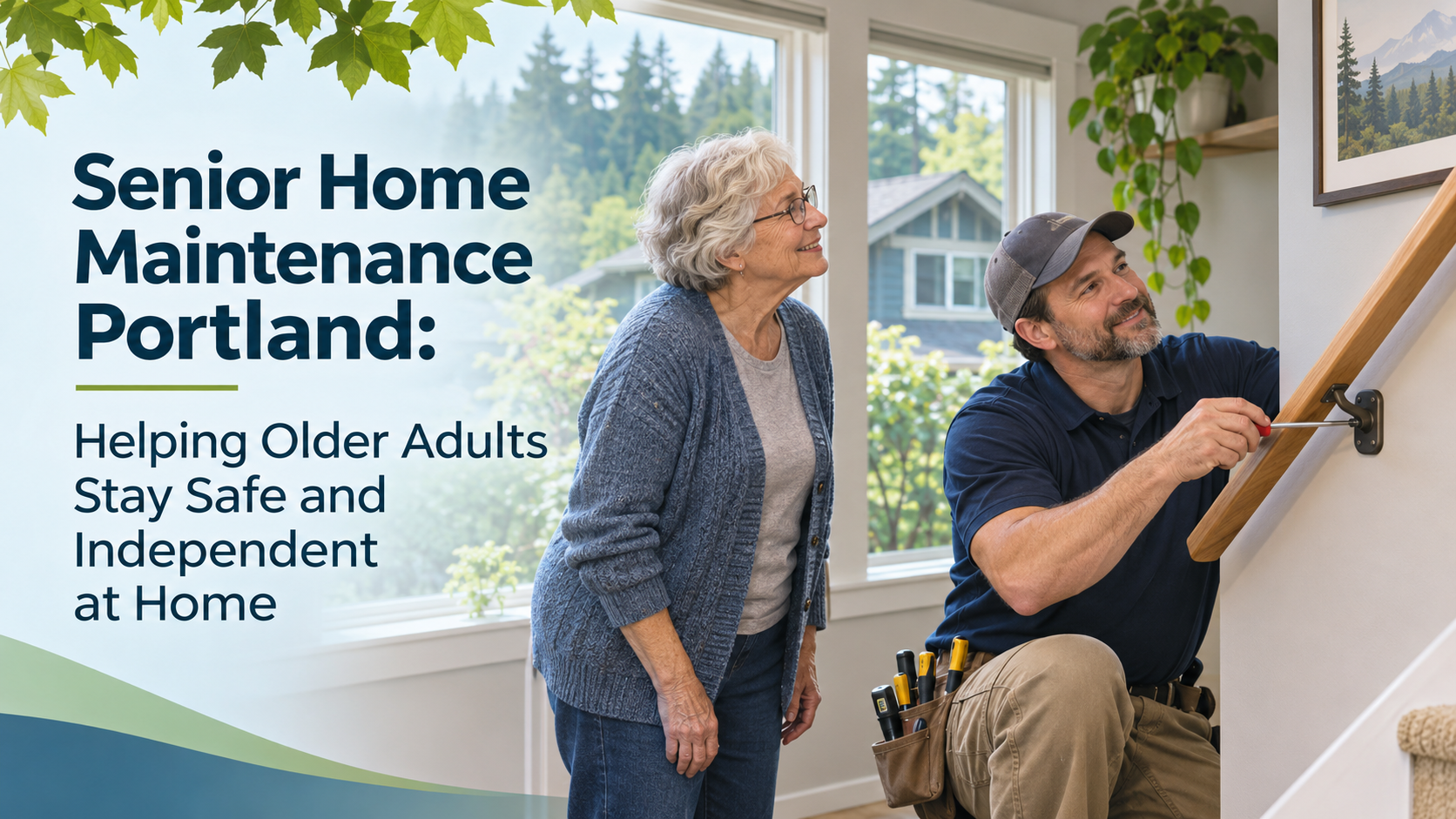
For many older adults, staying in their own home is about more than convenience. It means keeping familiar routines, remaining close to neighbors and family, and continuing to enjoy a space filled with memories.
But a home that has worked well for decades may become harder to navigate as mobility, balance, strength, or vision changes. A few steps at the entrance, a slippery bathroom floor, a loose handrail, or a difficult-to-open door can turn ordinary daily activities into challenges.
That is why Senior Home Maintenance Portland is about more than fixing things after they break. It involves keeping the property in good condition while identifying practical improvements that make everyday living safer and more manageable.
With routine maintenance, a home safety assessment, and the right accessibility modifications, families can make informed decisions about supporting an older adult who wants to age in place.
Why Senior Home Maintenance Requires a Different Approach
Regular home maintenance matters at every age, but some household problems can have a greater impact on older residents.
For example, a loose stair railing may be an inconvenience for one person but an important safety concern for someone who relies on it for support. A raised flooring transition can become difficult to cross for someone using a walker. Poor lighting may make it harder to identify steps or obstacles at night.
Senior-focused maintenance looks at how a person actually uses the home.
It may involve checking:
Entryways and walkways: Looking for uneven surfaces, loose steps, and obstacles that make entering or leaving the home difficult.
Bathrooms: Reviewing flooring, shower access, grab bars, and other features that affect daily use.
Stairs and railings: Checking whether handrails are secure and whether stairways have adequate lighting.
Doors and thresholds: Identifying doors that are difficult to open and raised transitions that may create trip concerns.
Lighting: Looking for dim hallways, stairwells, and entry points that need better illumination.
These checks help families prioritize repairs based on the resident's needs rather than making unnecessary changes throughout the property.
Start With an Aging in Place Home Safety Assessment
Before planning a major renovation, it helps to understand which parts of the home are creating the most difficulty.
An Aging in Place Home Safety Assessment provides an opportunity to walk through the property and review areas where falls, strain, or access problems may occur.
A useful assessment considers the resident's everyday routine. Can they get into the home comfortably? Is the bathroom easy to use? Are commonly used items within reach? Can they move between rooms without navigating unnecessary obstacles?
A room-by-room review may cover:
| Area of the Home | What to Check | Possible Improvement |
|---|---|---|
| Entryway | Steps, thresholds, and exterior access | Handrails, threshold adjustments, or a ramp |
| Bathroom | Shower entry, flooring, and support | Grab bars, shower seating, or walk-in shower conversion |
| Stairways | Loose rails, uneven steps, and lighting | Handrail repairs and improved lighting |
| Hallways | Clutter, dim areas, and flooring transitions | Better lighting and trip-hazard corrections |
| Kitchen | Difficult-to-reach storage and handles | Cabinet adjustments and accessible hardware |
| Bedrooms | Door access and nighttime visibility | Easier-grip handles and improved lighting |
The assessment should result in a practical repair plan. Not every home needs extensive modifications. Some may need a few maintenance repairs, while others may benefit from more involved accessibility work.
Fall Prevention Home Modifications
Falls can happen in familiar places, including bathrooms, hallways, stairways, and entrances. Addressing visible hazards can make these areas easier to navigate.
Common Fall Prevention Home Modifications include:
Grab Bars and Handrails
Grab bars can provide a stable handhold near showers, tubs, and toilets. Handrails can also improve support along stairways, decks, and entry steps.
Their placement and installation matter. They should be secured appropriately for the wall or structure and positioned around the way the resident moves through the space.
Improved Lighting
Dim hallways and stairways can make it harder to see obstacles and changes in floor height. Better lighting, motion-sensor fixtures, and strategically placed nightlights can improve visibility in frequently used areas.
Flooring and Trip-Hazard Repairs
Loose flooring, uneven transitions, raised thresholds, and damaged walkway surfaces deserve attention. Repairing these areas can help reduce obstacles that interfere with walking or mobility devices.
Safer Stairways
Stairways may need secure handrails, repaired treads, improved lighting, or traction strips. The right changes depend on the stair design and the resident's mobility.
These improvements should be selected based on the specific risks in the home rather than installed as a standard package.
Walk-In Shower Conversion and Bathroom Accessibility
Bathrooms deserve particular attention because water, smooth surfaces, and limited space can make movement difficult.
For someone who has trouble stepping over a traditional bathtub wall, a Walk-in Shower Conversion may make bathing more accessible.
Depending on the bathroom layout and the resident's needs, a modification plan may include:
Lower-threshold shower access: Reducing the height that someone needs to step over when entering the shower.
Grab bars: Adding appropriately placed support near shower entrances and other important areas.
Shower seating: Providing a place to sit during bathing when needed.
Handheld showerheads: Making it easier to direct water while seated or standing.
Non-slip surfaces: Improving traction in areas that are regularly exposed to water.
A bathroom modification should account for available space, drainage, waterproofing, fixture placement, and the way the resident will use the shower.
The objective is to make everyday bathroom routines easier without creating new access problems.
Wheelchair Ramp Installation and Easier Home Access
Steps at the front entrance, back door, or garage can become a significant barrier for someone using a wheelchair or walker.
Wheelchair Ramp Installation may provide an alternative route where the property layout allows it.
A ramp project needs more planning than simply placing a sloped surface beside the steps. The available space, slope, landing areas, surface traction, drainage, and connection to the entrance all matter.
Other access improvements may also help, including:
Reducing raised doorway thresholds where appropriate.
Installing secure handrails beside entry steps.
Repairing uneven porch or landing surfaces.
Improving the transition between indoor and outdoor flooring.
Adjusting door hardware to make opening and closing easier.
The right design depends on the home's layout and the mobility equipment being used. Permit and applicable building requirements should also be reviewed before work begins.
Non-Slip Flooring Installation for Seniors
Flooring can affect how confidently someone moves around the home.
Bathrooms, kitchens, entryways, and laundry areas may become slippery when wet. Worn flooring, loose sections, and uneven transitions can also create obstacles.
Non-slip Flooring Installation for Seniors may be worth considering when existing surfaces do not provide suitable traction.
However, choosing a floor involves more than selecting a material described as slip-resistant. The surface, installation method, maintenance needs, moisture exposure, and transitions between rooms all matter.
In some cases, replacing the entire floor may not be necessary. Repairing a loose section, correcting a raised transition, or improving a specific problem area may be enough.
Routine Senior Home Repair Services and Seasonal Maintenance
Accessibility improvements are only one part of keeping a home suitable for long-term living. Routine repairs still matter.
Small issues can become harder to manage when they are left unattended. A dripping faucet, sticking door, loose cabinet handle, or damaged exterior step may seem minor, but each can affect daily comfort and property condition.
Senior home repair services may include:
Door and hardware repairs: Adjusting sticking doors, repairing hinges, and replacing difficult-to-use handles.
Drywall and trim repairs: Addressing holes, damaged corners, and worn interior finishes.
Bathroom and kitchen upkeep: Repairing minor fixture issues, adjusting cabinets, and replacing deteriorated caulking in appropriate areas.
Exterior maintenance: Checking gutters, weatherstripping, siding, fences, and accessible outdoor areas.
Seasonal home checks: Reviewing visible maintenance concerns before and during Portland's wetter months.
Scheduled visits can help families keep track of repairs that might otherwise be postponed. Maintain It Now's senior maintenance service also describes documented checklists, minor repairs during visits, and direct coordination with family members or caregivers.
When Should Families Consider a CAPS Certified Specialist?
Families do not always know whether a home needs a basic repair or a more involved accessibility modification.
A Certified Aging in Place Specialist has training focused on the needs of people who want to remain in their homes as they age. This perspective can be useful when a project involves bathroom access, stairways, ramps, doorways, or other changes that affect mobility and everyday use.
A CAPS-informed professional can help evaluate the resident's routine, identify potential barriers, and plan modifications around the property rather than recommending the same changes for every household.
When searching for a CAPS Certified Aging in Place Specialist near me, families should look at the professional's relevant training, project experience, communication, and understanding of the home's specific requirements.
For larger renovation work, the project may also require additional trade professionals, permits, or specialist assessments.
Why Portland Homes May Need Accessibility Updates
Portland has a mix of older homes and newer construction. Some older properties have narrow hallways, steep stairs, raised entrances, or compact bathrooms that were not designed around modern accessibility needs.
These features do not automatically mean a home is unsuitable for aging in place. They do mean that modifications should be planned carefully.
For example, a ramp may need to work around limited front-yard space. A bathroom conversion may require changes to the existing layout. A doorway adjustment may need to account for the surrounding wall and structure.
A local provider familiar with Portland properties can help identify practical options and determine when additional expertise or approval is needed.
How Maintain It Now Supports Senior Home Maintenance Portland
Maintain It Now provides senior home maintenance and aging-in-place services across the Portland Metro area.
The company's senior maintenance work includes scheduled seasonal home checks, minor repairs, exterior and weatherproofing upkeep, safety spot-checks, and coordination with family members or caregivers.
Its team also provides accessibility improvements such as ramps, retrofit walk-in showers, grab bars, handrails, and trip-hazard corrections. The company identifies CAPS-certified expertise as part of its approach to planning senior-friendly home improvements.
Families can learn more about Senior Home Maintenance Portland and the company's ongoing repair and maintenance services.
For projects involving broader accessibility changes, the CAPS contractor and aging-in-place services page explains its approach to home assessments, bathroom modifications, stair and hallway safety, entryway access, and other home improvements.
When work requires specialized plumbing, electrical, HVAC, or other licensed trade services, Maintain It Now coordinates with appropriate vetted professionals.
Conclusion
A home does not need to undergo a complete renovation to become more suitable for an older resident. Sometimes the most useful improvements are targeted: a secure handrail, better bathroom access, a repaired threshold, improved lighting, or regular maintenance that keeps small problems from being overlooked.
For seniors, family caregivers, and adult children managing a parent's household, a practical plan can make it easier to understand what needs attention now and what may be worth addressing in the future.
Maintain It Now supports Senior Home Maintenance Portland through routine repairs, seasonal checks, safety improvements, and aging-in-place modifications. If you are considering updates to help someone remain comfortable and independent at home, Contact Maintain It Now to discuss the property and the improvements that may be appropriate.
Frequently Asked Questions
-
Senior home maintenance can include routine repairs, seasonal home checks, exterior upkeep, safety spot-checks, door and hardware repairs, bathroom and kitchen maintenance, and accessibility improvements based on the resident's needs.
-
It is a walkthrough of the home that identifies potential barriers and safety concerns. Areas such as bathrooms, entryways, stairways, flooring transitions, lighting, and frequently used rooms may be reviewed to help create a practical improvement plan.
-
Depending on the home, improvements may include grab bars, secure handrails, better lighting, non-slip surfaces, repaired flooring transitions, stair repairs, and clearer walking paths.
-
It may be helpful for someone who has difficulty stepping over a traditional bathtub wall. The design should consider entry height, available space, drainage, grab-bar placement, seating, and the resident's mobility needs.
-
In many cases, a ramp can be designed for an existing entrance. The available space, slope, landing areas, surface, drainage, and applicable building requirements need to be considered before installation.
-
Families may benefit from CAPS-informed guidance when planning accessibility changes involving bathrooms, stairs, entrances, doorways, ramps, or other areas that affect mobility and everyday activities.
-
Yes. Scheduled maintenance can help families keep track of minor repairs, seasonal upkeep, and visible safety concerns. The visit frequency can be based on the home's condition and the resident's needs.